Dr. Rich Howard is an orthopedic surgeon who attends New Community Church in St. Louis, MO. Read about his incredible story in partnership with a small clinic in Honduras as they blend specialized surgical care with gospel-centered ministry—and why this is just the beginning.
A Partnership Begins
Dr. Rich Howard, along with his wife, Becky, has been volunteering his expertise in the service of medical missions since 2006, starting in Nicaragua and transitioning to Honduras when conditions in Nicaragua became unsafe.
“Actually,” Dr. Howard says, “our oldest daughter, when she was in high school, came home one day and said, ‘I found an orthopedic team that’s going to Honduras. We’re going to sign up.’ And that was really the beginning of our past 15 years of experience in Honduras.”
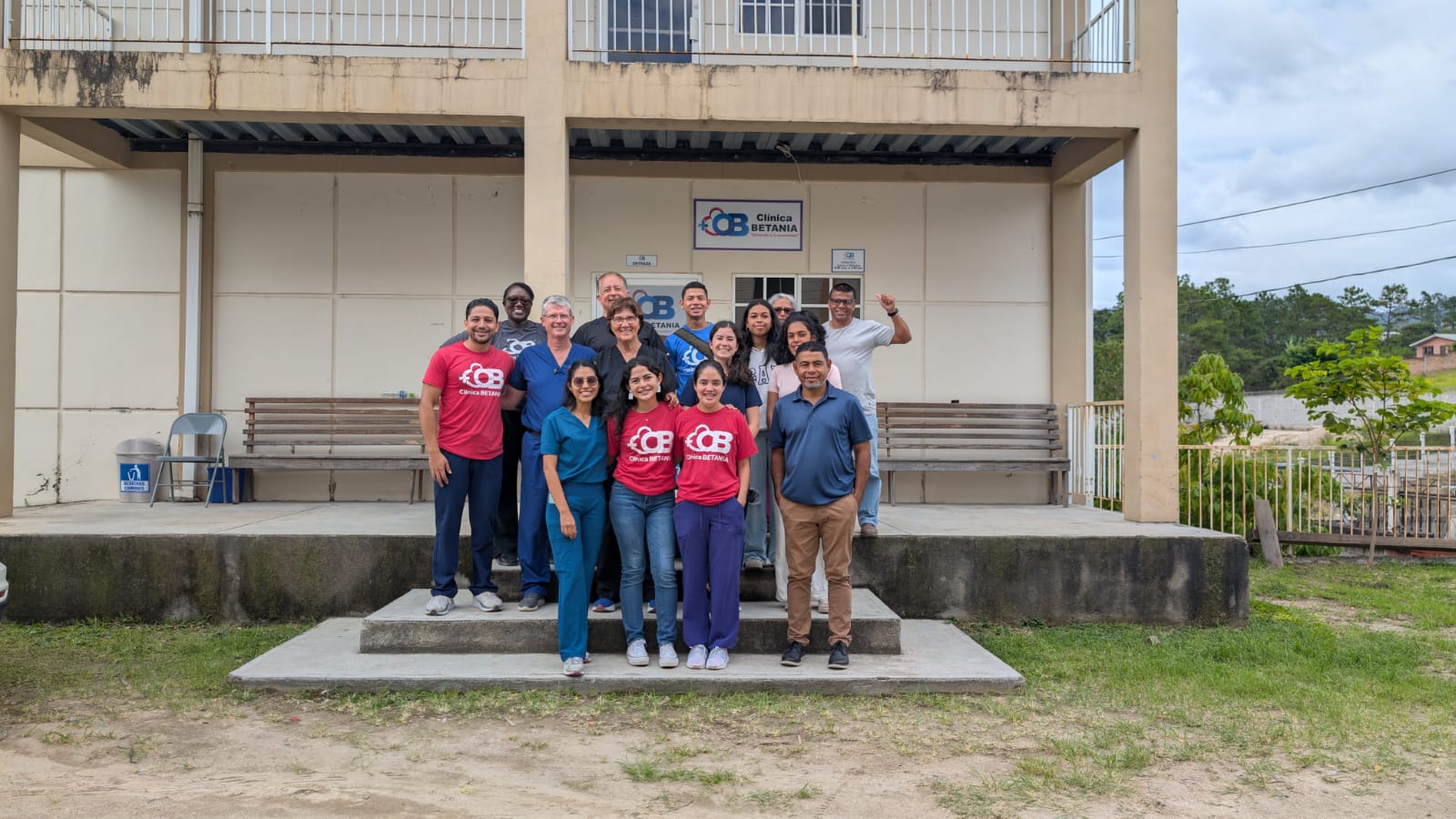
Much of his experience has been serving alongside Global Health Outreach teams, in partnership with the Ministry of Divine Mercy. He first heard about SEPE International in 2025 and participated this past July in partnership with Clínica Betania.
Because of his sub-specialization in hand and upper extremity, the clinic promoted a surgical brigade for upper extremity problems and received an enthusiastic response from patients seeking specialized care.
“In an agricultural community,” Dr. Howard says, “there’s just a lot of hand problems. And so that’s exclusively what we did.”
In a field often marked by patient anxiety, Dr. Howard was struck by the sense of serenity he experienced at Clínica Betania.
“When we do a lot of hand procedures in the States, we do them under local anesthesia in a procedure room,” he says. “And typically, the staff and myself, we just have a conversation about recovery and restrictions and post-op wound care and a lot of details like that. In this situation, since we had the translator, I wasn’t talking much. I was just working, and the translators were sharing the Gospel.”
As he worked and the translator spoke, a dramatic change came over the room.
First, Dr. Howard says, “The patient, just by conversational etiquette, was looking away from where we were working.”
Second, he says, “What was interesting to me is, having a broad experience with having done these techniques over many years, the peace in the room. The patients were still – they weren’t anxious at all.”
Dr. Howard saw firsthand that diverting the patient’s attention while proclaiming the Gospel during a procedure proved to be a “combination [that] was very effective,” he says. “I told [the staff] it was my new favorite thing.”
His experience, in many ways, highlights the true joy and privilege of working alongside brothers and sisters in Christ.
“An outside observer would have thought we worked together for a long time,” he says. “You wouldn’t know we hadn’t met until this week. But that’s the pleasure of working with people who have a servant’s heart.”
Even so, operating in a context very different from home comes with its limitations, including limited access to resources.
“You have to be more conservative,” he says. “You don’t want to put yourself in a situation where you don’t have certain special equipment or special supplies.”
For that reason, Dr. Howard found it prudent to take on low-risk surgeries for the time being, to ensure he had the necessary equipment to meet the needs of the moment.
“For example,” he says, “we had a variety of patients who had ganglions in the front of their wrist. When dissecting those, it’s quite common to have small areas of bleeding. Sometimes they can be surprisingly large. You can easily deal with that if you have an electrocautery machine, … but we should not because we could get ourselves in a compromising situation.”
Based on the results of this two-day pilot, Dr. Howard sees great potential for higher output and efficiency on future trips.
“We were conservative in the number of patients that we saw, and we were conservative in the estimate of procedures we thought we would do,” he says. “And it turned out to be surprisingly accurate. But now we’ve been, it would not take much effort to double that volume without working harder, just being more efficient.”
An Established Partnership
Despite his plans for improvement, Dr. Howard reinforces that volume is not his primary interest. The 13 procedures Dr. Howard performed were more than medical interventions—they were opportunities to share the gospel with 13 individuals he knew would receive ongoing care for both their spiritual and physical needs.
“The beauty of the ministry at the clinic is that first things are first,” he says. “And it’s gospel first. And then we attend to your medical issue, while we attend to the heart issues.”
His eyewitness account reflects the strength of a ministry rooted in accountability and connection with both the local and global church.
“I have no concerns at the Betania Clinic,” he says. “They’re all highly qualified, and patients will get great care. In addition to that follow-up care, we’ll continue to [remotely] follow those patients as they come back to the clinic and see the staff.”
Moving forward, Dr. Howard is inspired by the clinic’s plans to expand its range of services and enhance access to care.
“The clinic already has plans to utilize their available space, and they have architectural drawings for outpatient surgery and outpatient labor and delivery,” he says. “So future ministry is just coming alongside and recruiting other expertise to come alongside and help them create their vision of an ambulatory surgery center that can serve the needs of their community.”